 Call Now:

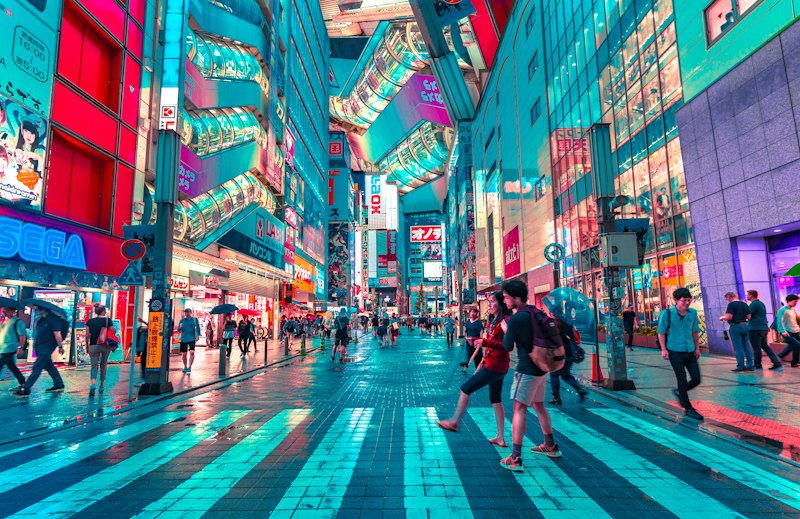
Tokyo defies easy description. Spread across 23 municipal wards and home to 14 million people in the city proper (37 million in the greater metropolitan area), it functions less as a single city and more as a constellation of distinct neighborhoods, each with its own personality. Visit Shibuya at night and you're in the global capital of neon and crowds. Walk through Yanaka the next morning and you're in a quiet Edo-period district where time has stopped. The challenge for first-time visitors is not finding things to do — it's knowing where to focus. This guide covers when to go, where to stay, what to see, and the practical details that make a Tokyo trip work.
When to Visit
Tokyo has four distinct seasons, and your travel timing dramatically affects the experience. The two best windows are well-known but for different reasons.
Late March through mid-April is cherry blossom (sakura) season. The blooms last roughly 7 to 10 days in Tokyo, with peak typically the last week of March and first week of April. The atmosphere is genuinely magical — picnics under the trees in Ueno Park, illuminated cherry trees along the Meguro River, hanami parties everywhere. The downside is crowds and prices: hotels can double, and popular sites are mobbed. Book everything 4 to 6 months in advance.
October and November bring koyo (fall foliage) season with mild temperatures, low rainfall, and the changing colors of momiji (Japanese maple) and ginkgo trees. The crowds are smaller than spring, the weather is more reliable, and prices are reasonable. Many travelers consider this the best overall time to visit Tokyo.
Summer (late June through August) brings heat (often 90+°F) and humidity, but also the spectacular summer festivals and fireworks (hanabi) along the Sumida River. Winter (December through February) is cool and dry, with low tourist density and the lowest hotel prices. The Christmas illuminations across the city are spectacular and underrated.
How Long to Stay
Five to seven days is the right length for a first Tokyo visit. Three days is too short — you'll spend most of your time on logistics and miss the depth. Ten days starts to overlap with diminishing returns unless you include day trips. The classic itinerary: 5 days in Tokyo plus 2 to 3 days for nearby destinations like Kyoto, Hakone, or Nikko.
Where to Stay: Neighborhood by Neighborhood
Tokyo has no single "tourist zone." Different neighborhoods offer different experiences, and your choice should match the trip you want.
- Shinjuku — Best for first-timers; transit hub with everything in walking distance, neon nightlife, and Shinjuku Gyoen park; expect crowds and noise
- Shibuya — Younger and trendier than Shinjuku; nightlife, fashion, and the famous scramble crossing; loud and busy
- Ginza — Upscale with luxury shopping and traditional theater; quieter at night; pricey hotels
- Asakusa — Historic and traditional; close to Senso-ji Temple, Tokyo Skytree, and the Sumida River; charming but feels touristy
- Roppongi — Nightlife and international scene; close to art museums (Mori, Suntory, National Art Center)
- Tokyo Station / Marunouchi — Business district that's emerged as a serious dining and architecture destination; convenient for shinkansen day trips
- Yanaka and Nezu — Old Tokyo districts that survived WWII bombing; quieter, more local, with traditional houses and small temples
For a first-time visit, Shinjuku offers the best combination of convenience, transit access, and things to do within walking distance. Avoid hotels in inconvenient outer wards like Adachi or Edogawa — the time you save on a cheaper room is lost on subway commutes.
Getting Around
Tokyo's transit system is extensive, punctual, and remarkably easy to navigate once you understand it. The combination of JR (Japan Rail) trains and the Tokyo Metro/Toei subway covers virtually the entire city.
Get a Suica or Pasmo IC card at any station. Load it with yen at a vending machine, then tap in and out at gates — no need to calculate fares. The cards work on all trains, subways, and buses, plus convenience stores and many vending machines. Your Suica balance can be transferred to other Japanese cities (it works in Kyoto, Osaka, Nagoya, etc.).
A 7-day Japan Rail Pass costs around $250 and is worth it only if you plan multiple long-distance trips on the shinkansen (bullet train). For travel only within Tokyo, individual fares are cheap enough that a pass is unnecessary. Use the Japan Travel by NAVITIME or Google Maps for routing — both are accurate and easy.
Taxis are reliable but expensive — typically $15 to $30 for short Manhattan-equivalent trips. Use them late at night when trains stop running (most lines stop around 1 AM). Rideshare (Uber) operates but at similar prices to taxis.
Must-Visit Spots
Tokyo has hundreds of attractions worth visiting. These are the ones that genuinely deserve their reputation for first-time visitors.
- Senso-ji Temple, Asakusa — Tokyo's oldest Buddhist temple; visit early morning to avoid crowds
- Meiji Shrine — Peaceful Shinto shrine in the heart of the city, surrounded by forest
- Shibuya Crossing — Iconic intersection; the elevated view from the Starbucks or Mag's Park rooftop is the best photo spot
- Tsukiji Outer Market — Fresh sushi breakfasts and Japanese kitchen tools; the inner wholesale market relocated to Toyosu
- Tokyo Metropolitan Government Building, Shinjuku — Free observation decks on the 45th floor with great views
- Akihabara — Electronics, anime, manga, and gaming culture; visit a maid café once for the experience
- Harajuku and Omotesando — Youth fashion, designer shopping, and Yoyogi Park
- TeamLab Planets, Toyosu — Immersive digital art experience; book tickets in advance
- Yoyogi Park on a Sunday — Free entertainment from cosplay groups, rockabilly dancers, and street performers
- A neighborhood izakaya — Small Japanese pub for grilled food and beer; ask hotel staff for recommendations
Food: What to Eat and Where
Tokyo has more Michelin stars than any city in the world, but the best meals are often the cheapest. Ramen, sushi, tonkatsu, soba, udon, yakitori, izakaya — each has dedicated specialty restaurants where the chef has spent decades perfecting one dish.
For sushi, Tsukiji Outer Market is the tourist-friendly option, while Toyosu Market hosts the early morning tuna auctions. Conveyor belt sushi (kaiten) chains like Sushiro and Kura offer remarkable quality for $1 to $4 per plate. Mid-range omakase experiences run $80 to $150 and are widely available without months-ahead reservations.
Ramen comes in distinct regional styles — tonkotsu (Hakata), shoyu (Tokyo), miso (Sapporo), and tsukemen (dipping ramen). Famous shops like Ichiran, Ippudo, and Afuri are good. For something more local, ask your hotel for the nearest small neighborhood ramen shop. The line is the indicator of quality.
Convenience stores (konbini) — 7-Eleven, Lawson, FamilyMart — sell genuinely good food at low prices. Onigiri (rice balls), sandwiches, prepared meals, and desserts at konbini are popular with locals and excellent quality. Many travelers eat half their meals from konbini and feel no compromise.
Day Trips Worth Taking
Tokyo is a fantastic base for exploring the surrounding region. The shinkansen and express trains make day trips practical from the city.
- Hakone — Mountain hot spring (onsen) town with views of Mt. Fuji, 90 minutes by Romancecar from Shinjuku
- Kamakura — Coastal town with the Great Buddha statue and ancient temples, 1 hour by JR from Tokyo
- Nikko — UNESCO World Heritage shrines and dramatic mountain scenery, 2 hours by limited express
- Kyoto — The cultural capital; technically a separate trip but reachable in 2.5 hours by shinkansen
- Disney Tokyo / DisneySea — Two of the world's best Disney parks, 30 minutes from central Tokyo
- Mt. Fuji from Lake Kawaguchi — The classic Fuji view; 2 hours by bus from Shinjuku
Practical Tips
- Cash is still king in many small restaurants and shops; carry at least 10,000 yen ($65) at all times
- Tipping is not customary and can confuse staff; do not tip at restaurants or hotels
- Vending machines are everywhere and sell genuinely good drinks for $1 to $2
- Public Wi-Fi is unreliable; rent a pocket Wi-Fi or use an eSIM for reliable connectivity
- Toilets are remarkable — heated seats, bidet functions, automatic flush; explore the buttons
- Trains stop around 1 AM and start around 5 AM; plan accordingly or budget for taxis
- Garbage bins are rare on streets; carry a small bag for trash until you can dispose of it
Getting There
Two airports serve Tokyo. Narita International Airport (NRT) is 60 minutes from central Tokyo via the Narita Express train and handles most international flights. Haneda Airport (HND) is closer (30 minutes from central Tokyo) and increasingly handles transpacific flights. Flight times from the US west coast are about 11 hours nonstop, and 13 to 14 hours from the east coast.
For the best fares, book Tuesday and Wednesday departures and aim for 3 to 5 months advance purchase. ANA, JAL, and United typically offer the best premium cabin experiences on US-Tokyo routes. Our agents can compare fares across all carriers and find creative routings — call us before booking online for a no-obligation comparison.